Shrvaan Maas
22 July- 19 August 2024

What makes Shravan maas the holiest of all Hindu months?
It was because during this month, the samundar manthan (churning of ocean) took
place, when Lord Shiva stepped in and saved the whole cosmos or universe from
destruction.
While churning the ocean by Devtas and demon kings, it is believed that 14 various
types of rubies were derived. It's been said that 13 of these were evenly distributed
between the Devtas and demons, but the jahar (poison or halahal) was spared.
None of the Devtas or the demons were willing to consume or accept this strong
poison - except Sri Shiva-ji - who drank the jahar but kept the liquid in his throat -
thus deriving his name: Nilkantha (Nil - meaning blue) and Kantha(throat).
It is said in various scriptures that to minimise the very strong effects of the poison,
Sri Shiva-ji wore the tiny crescent of the Chandar Devta (moon) on his forehead.
It is also believed that offering Ganga jal on Shiva lingam also started around this
month to calm the effects of the poison in Lord Shiva's throat.
Every day of this Sharvan month has its own significance, and rituals that can be
observed. However, no days are more auspicious than Shravan Mondays.
While Mondays in Sharvan maas are particularly auspicious for Sri Shiva-ji, other
days of this month are very special for the following:
Tuesdays
Devi Gauri or Parvathi or Durga, especially by women for good health of their
family:
WednesdaysLord Vishnu or his reincarnations like Sri Krishna and Sri Ram.
ThursdaysGayatri Devi, saraswati or your own Guruji.
FridaysSri Laxmi and Tulsi Vrinda Devi.
SaturdaysShani Devta - particularly important for fighting ill-effects of Shani in
regards to obstacles of wealth being derived in homes.
SundaysWorshipping of Lord Surya.It is considered particularly beneficial to start
Solar Somvaar Varat (16 Mondays of fasting) during the month of Shravan.
The star Shravan rules the astrologies during Shravan Maas – this is where the
month derives its name. This is the holiest month for Shiv bhakti - similar to the
month of Kartik for Lord Vishnu’s bhakti.
During this month Lord Shiva’s devotees should:
For all other Mantras, Chalisas and devotional songs please check the Bhakti and
Puja webpage on this site.
It was because during this month, the samundar manthan (churning of ocean) took
place, when Lord Shiva stepped in and saved the whole cosmos or universe from
destruction.
While churning the ocean by Devtas and demon kings, it is believed that 14 various
types of rubies were derived. It's been said that 13 of these were evenly distributed
between the Devtas and demons, but the jahar (poison or halahal) was spared.
None of the Devtas or the demons were willing to consume or accept this strong
poison - except Sri Shiva-ji - who drank the jahar but kept the liquid in his throat -
thus deriving his name: Nilkantha (Nil - meaning blue) and Kantha(throat).
It is said in various scriptures that to minimise the very strong effects of the poison,
Sri Shiva-ji wore the tiny crescent of the Chandar Devta (moon) on his forehead.
It is also believed that offering Ganga jal on Shiva lingam also started around this
month to calm the effects of the poison in Lord Shiva's throat.
Every day of this Sharvan month has its own significance, and rituals that can be
observed. However, no days are more auspicious than Shravan Mondays.
While Mondays in Sharvan maas are particularly auspicious for Sri Shiva-ji, other
days of this month are very special for the following:
Tuesdays
Devi Gauri or Parvathi or Durga, especially by women for good health of their
family:
WednesdaysLord Vishnu or his reincarnations like Sri Krishna and Sri Ram.
ThursdaysGayatri Devi, saraswati or your own Guruji.
FridaysSri Laxmi and Tulsi Vrinda Devi.
SaturdaysShani Devta - particularly important for fighting ill-effects of Shani in
regards to obstacles of wealth being derived in homes.
SundaysWorshipping of Lord Surya.It is considered particularly beneficial to start
Solar Somvaar Varat (16 Mondays of fasting) during the month of Shravan.
The star Shravan rules the astrologies during Shravan Maas – this is where the
month derives its name. This is the holiest month for Shiv bhakti - similar to the
month of Kartik for Lord Vishnu’s bhakti.
During this month Lord Shiva’s devotees should:
- Wear Rudraksh, and also use a Rudraksh mala for Japa
- Offer Lord Shiva Bhibhuti and place some on your forehead
- Make offerings of Bael leaves, milk, yoghurt, ghee, honey and gur on Shiva Ling
- Recite or Shiv Katha and Aarti
- Chant Maha Mrityunjaya Mantra
For all other Mantras, Chalisas and devotional songs please check the Bhakti and
Puja webpage on this site.
Raksha Bandan
19 August 2024

This festival is more than just a celebration of
the brother-sister bond.
The day when the siblings pray for each others'
well being and wish for each others' happiness
and goodwill.
As the name 'Raksha Bandhan'
suggests, 'a bond of protection', Raksha Bandhan
is a pledge from brothers to protect the sister from all harms and troubles and a
prayer from the sister to protect the brother from all evil.
It also signifies the importance of Guru of spiritual master in one's life. Hindu males
who have taken vows to their Guru exchange their holy threads (yajo-pavitra) on
this day and make special offerings to their Gurus or ancestors.
Of all castes, Brahmins consider this day most important as they exchange their
sacred thread and recite mantras as well as vedhs and purans.
Our rishis (saints) have often pointed out that those of us who go through gurmukh
or yajo-pavitra sanskar in our youths swear allegiance to our Guru, and on this
Raksha Bandhan day pay respect to our spiritual master.
The sacred thread symbolises the third eye or the eye of wisdom - one which
transforms the young boy into a new man.
The Origin of Raksha Bhandhan
The katha at the origin of Raksha Bhandhan is multifold:
Rajah Bali
The original katha from which the Raksha Bandhan ritual comes, is about Rajah Bali,
the former demon King who became the great devotee of Lord Vishnu (as Vaman
Avatar).
After changing his ways Rajah Bali received a vardhan ( boon) from Lord Vishnu to
have HIM always guard his kingdom.
Lord Vishnu had to leave his own adobe in Vaikunth dhaam and go to Rajah Bali's
kingdom in Sutal Lok.
During Lord Vishnu's absence from Vaikunth Dhaam, Mata Lakshmi felt very lonely
as though being widowed. So Sri Lakshmi-ji went to Sutal Lok disguised as a
Brahmin woman to find her husband and beg for his return.
Mata Lakshmi-ji arrived there during the Shravan Purnima celebrations. She tied a
Rakhi around Rajah Bali’s right wrist adopting him as her brother. She revealed who
she was and why she was there. The king was touched by her goodwill .
In return Rajah Bali gave her the boon of having her husband back for 8 months of
the year. While Lord Vishnu was not guarding Rajah Bali, Lord Shiva and Lord
Brahma each agreed to take turns to look after Rajah Bali in HIS absense.
The day that Mata Lakshmi-ji tied the raksha on Rajah Bali’s wrist is the day we
celebrate as Raksha Bandhan.
Sri Indra Dev
The second katha relating to Raksha Bandhan is of Lord Indra, the king of all
devtas, who had the holy thread tied around his wrist by Sachi (his consort or wife).
As a solution to defeat the advancing demons with whom Indra was battling, Guru
Brihaspati asked Sachi to tie the rakhi on her husband’s wrist, for his protection.
With the protection given by the power of scared mantras in that rakhi, lord Indra
achieved his goal by conquering Amravati, the demon king.
Sri Krishna Govind
In the Mahabarath there is a katha where Lord Krishna advised Yudhishthir to
perform the ritual of Raksha Bandhan to protect himself and his army from the
dangers of war.
Also Queen Kunti (of the Pandavas) tied a raksha on her grandson Abhimanyu to
protect him in battle.
Draupadi also became the sister of Lord Krishna when she bandaged his bleeding
finger.
Sri Yam Dev
It is also stated in some scriptures that Yamuna tied the rakhi on the wrist of her
brother Lord Yama giving him immortality.
Lord Yama declared after this touching ceremony that whoever has a rakhi tied on
their wrist by their sister and pledges their protection will gain immortality.
On this Raksha Bandhan day
We pay respect for the spiritual knowledge we have achieved from our Gurus
We make offerings to spiritual Gurus including parents to whom we owe our birth,
especially those of Brahmin background.
- Brothers and sisters exchange sweets and gifts to commemorate the past year
and give assurance for the coming year’s continuing bond and protection of their
siblings. Sisters visit the homes of their brothers and tie a rakhi or raksha bandan on
the hand of their brothers.
The following mantra is chanted whilst changing the holy thread:
Yena baddho balee raajaa daanavendro
mahaabalah;
Tena twaam anubadhnaami rakshey maa chala maa chala.
It is the same mantra used by purohits or priests when tying a thread around the
wrist of their devotees. And when it comes to tying the Rakhi or Raksha around their
brothers' hands, their sisters also recite this powerful mantra - from which we
pledge:
"I am tying on your hand this Raksha,
with which the most powerful and generous King Bali himself was
bound; O
Raksha, don’t go away; don’t go away."
Raksha means protection, and bandhan means bond, hence Raksha Bandhan is a
bond of protection.
the brother-sister bond.
The day when the siblings pray for each others'
well being and wish for each others' happiness
and goodwill.
As the name 'Raksha Bandhan'
suggests, 'a bond of protection', Raksha Bandhan
is a pledge from brothers to protect the sister from all harms and troubles and a
prayer from the sister to protect the brother from all evil.
It also signifies the importance of Guru of spiritual master in one's life. Hindu males
who have taken vows to their Guru exchange their holy threads (yajo-pavitra) on
this day and make special offerings to their Gurus or ancestors.
Of all castes, Brahmins consider this day most important as they exchange their
sacred thread and recite mantras as well as vedhs and purans.
Our rishis (saints) have often pointed out that those of us who go through gurmukh
or yajo-pavitra sanskar in our youths swear allegiance to our Guru, and on this
Raksha Bandhan day pay respect to our spiritual master.
The sacred thread symbolises the third eye or the eye of wisdom - one which
transforms the young boy into a new man.
The Origin of Raksha Bhandhan
The katha at the origin of Raksha Bhandhan is multifold:
Rajah Bali
The original katha from which the Raksha Bandhan ritual comes, is about Rajah Bali,
the former demon King who became the great devotee of Lord Vishnu (as Vaman
Avatar).
After changing his ways Rajah Bali received a vardhan ( boon) from Lord Vishnu to
have HIM always guard his kingdom.
Lord Vishnu had to leave his own adobe in Vaikunth dhaam and go to Rajah Bali's
kingdom in Sutal Lok.
During Lord Vishnu's absence from Vaikunth Dhaam, Mata Lakshmi felt very lonely
as though being widowed. So Sri Lakshmi-ji went to Sutal Lok disguised as a
Brahmin woman to find her husband and beg for his return.
Mata Lakshmi-ji arrived there during the Shravan Purnima celebrations. She tied a
Rakhi around Rajah Bali’s right wrist adopting him as her brother. She revealed who
she was and why she was there. The king was touched by her goodwill .
In return Rajah Bali gave her the boon of having her husband back for 8 months of
the year. While Lord Vishnu was not guarding Rajah Bali, Lord Shiva and Lord
Brahma each agreed to take turns to look after Rajah Bali in HIS absense.
The day that Mata Lakshmi-ji tied the raksha on Rajah Bali’s wrist is the day we
celebrate as Raksha Bandhan.
Sri Indra Dev
The second katha relating to Raksha Bandhan is of Lord Indra, the king of all
devtas, who had the holy thread tied around his wrist by Sachi (his consort or wife).
As a solution to defeat the advancing demons with whom Indra was battling, Guru
Brihaspati asked Sachi to tie the rakhi on her husband’s wrist, for his protection.
With the protection given by the power of scared mantras in that rakhi, lord Indra
achieved his goal by conquering Amravati, the demon king.
Sri Krishna Govind
In the Mahabarath there is a katha where Lord Krishna advised Yudhishthir to
perform the ritual of Raksha Bandhan to protect himself and his army from the
dangers of war.
Also Queen Kunti (of the Pandavas) tied a raksha on her grandson Abhimanyu to
protect him in battle.
Draupadi also became the sister of Lord Krishna when she bandaged his bleeding
finger.
Sri Yam Dev
It is also stated in some scriptures that Yamuna tied the rakhi on the wrist of her
brother Lord Yama giving him immortality.
Lord Yama declared after this touching ceremony that whoever has a rakhi tied on
their wrist by their sister and pledges their protection will gain immortality.
On this Raksha Bandhan day
We pay respect for the spiritual knowledge we have achieved from our Gurus
We make offerings to spiritual Gurus including parents to whom we owe our birth,
especially those of Brahmin background.
- Brothers and sisters exchange sweets and gifts to commemorate the past year
and give assurance for the coming year’s continuing bond and protection of their
siblings. Sisters visit the homes of their brothers and tie a rakhi or raksha bandan on
the hand of their brothers.
The following mantra is chanted whilst changing the holy thread:
Yena baddho balee raajaa daanavendro
mahaabalah;
Tena twaam anubadhnaami rakshey maa chala maa chala.
It is the same mantra used by purohits or priests when tying a thread around the
wrist of their devotees. And when it comes to tying the Rakhi or Raksha around their
brothers' hands, their sisters also recite this powerful mantra - from which we
pledge:
"I am tying on your hand this Raksha,
with which the most powerful and generous King Bali himself was
bound; O
Raksha, don’t go away; don’t go away."
Raksha means protection, and bandhan means bond, hence Raksha Bandhan is a
bond of protection.
32 MISTAKES WE SHOULD AVOID DURING OUR DAILY WORSHIP
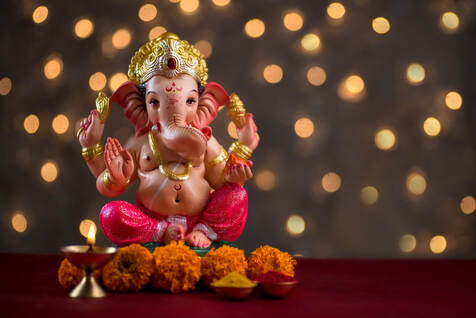
पूजा अर्चना में वर्जित काम
१) गणेश जी को तुलसी
२) देवी पर दुर्वा
३) शिव लिंग पर केतकी फूल
४) विष्णु को तिलक में अक्षत
५) दो शंख एक समान
६) तीन गणेश
७) तुलसी चबाना
८) द्वार पर जूते चप्पल उल्टे
९) दर्शन करके बापस लौटते समय घंटा
१०) एक हाथ से आरती लेना
११) ब्राह्मण को बिना आसन बिठा
ना
१२) स्त्री द्वारा दंडवत प्रणाम
१३) बिना दक्षिणा ज्योतिषी से पूछना
१४) घर में अंगूठे से बड़ा शिवलिंग
१५) तुलसी पेड़ में शिवलिंग
१६) गर्भवती महिला को शिवलिंग स्पर्श
१७) स्त्री द्वारा मंदिर में नारियल फोडना
१८) रजस्वला स्त्री का मंदिर प्रवेश
१९) परिवार में सूतक हो तो पूजा प्रतिमा स्पर्श
२०) शिव जी की पूरी परिक्रमा
२१) शिव लिंग से बहते जल को लांघना
२२) एक हाथ से प्रणाम
२३) दूसरे के दीपक में अपना दीपक जलाना
२४) अगरबत्ती जलाना बांस की सींक वाली
२५) देवता को लोभान या लोभान की अगरबत्ती
२६) स्त्री द्वारा हनुमानजी शनिदेव को स्पर्श
२७) कन्या ओ से पैर पडवाना
२८) मंदिर में परस्त्री को ग़लत निगाह से देखना
२९) मंदिर में भीड़ में परस्त्री से धक्का मुक्की
३०) साईं की अन्य प्रतिमाओं के साथ स्थापना
३१) शराबी का भैरव के अलावा अन्य मंदिर प्रवेश
३२) किसी तांत्रिक का दिया प्रसाद,
ये पूर्ण रूप से वर्जित हैं!
1) Never offer Sri Ganesh Tulsi leaves
2) Never offer durwa grass or tulsi to Ma Durga
3) Never offer Ketki flower on Shiva ling
4) Never offer rice to Sri Hari Vishnu
5) Never keep two sunk conch shell 🐚 of the same type
6) Never keep three Sri Ganesh on one shrine
7) Never eat or munch on tulsi leaves
8) Never leaves shoes upside down Mandir entrance
9) Do not ring bell ghanta whilst leaving Mandir after darshan
10) Never take Aarti with one hand
11) Never let a brahman sit without an assan
12) A lady or girl should not do dandwat pranaam - offering pranayam by lying flat
on ground
13) Never leave an astrologer without paying
14) Never keep a Shiv ling inside a house which is longer than a thumb
15) Never keep Shiv Ling and Tulsi plant together
16) Pregnant ladies should not take ashirvadh by touching feet
17) Ladies should not break a coconut inside a Mandir
18) Ladies should not enter Mandir or touch dirties during menstruation
19) During sutak - birth and death in family - all family members should avoid any f
form of prayers for 13 days
20) Never ever do full parikarma of Shiv Ling
21) Never cross or step over water that has been through the Shiv Ling or any other
statue
22) Never do pranayam with one hand
23) Never light one diya with another
24) Never use agarbathi - instead use dhoop because of use of bamboo in agarbathi
25) Never offer lobhaan to
Dev and deviya
26) Ladies should avoid Abhishek of Hanuman ji or
Shani Dev
27) Never let unmarried girls touch feet
28) Never see other ladies in Mandir with evil eye
29) Avoid being bumped into others especially ladies in Mandir
30) Never keep statue of Satya Sai baba or your own guru on your main puja shrine
31) A intoxicated person should never enter a Mandir except Sri Bhairav mandir
32) Never take prasad from a tantrik priest.
How much do we know about our holy shrines?
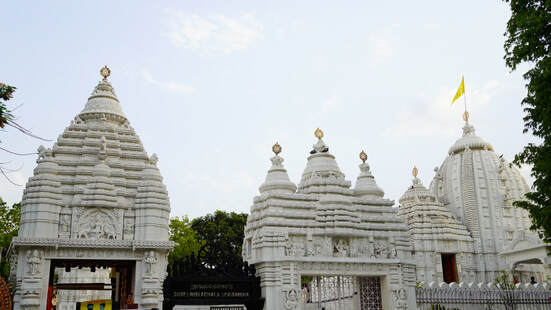
Hindus believe and worship many teerath (holy shrines) mainly located
in India.
They could be rivers, birth places of our avatars gods like Sri Ram and
Sri Krishna or
any of the divine places they visited.
Below is a PDF file encompassing all principal holy shrines commonly
visited by
Hindus from world over.
Download the Hindu Cosmos 2024 calendar below.
Learn about Tulsi leaf healing powers.
